

Sound Women Bristol celebrates International Women’s Day 2025!
107 years since The Representation of the People Act was passed on 6 February 1918 giving women the vote provided they were aged over 30 and either they, or their husband, met a property qualification.
Before 1918 no women were allowed to vote in parliamentary elections. In the early 20th century there were two main groups active in the campaign for women’s suffrage, a term used to describe the right to vote.
These two groups were the ‘suffragists’ who campaigned using peaceful methods such as lobbying, and the ‘suffragettes’ who were determined to win the right to vote for women by any means. Their militant campaigning sometimes included unlawful and violent acts which attracted much publicity.
From peaceful campaigning to militant tactics, the fight for women’s voting rights lasted many years. Find out how their goals were achieved, with full equality with men being won in 1928
Black women were involved in both the African American and international suffrage movements. Key figures include Ida B. Wells, Mary Church Terrell, and Sarah Remond.
African American suffragettes
Ida B. Wells
Journalist who founded the Alpha Suffrage Club for African American women
Mary Church Terrell
Co-founded the National Association of Colored Women and was a leader in the women’s suffrage movement
- Harriet Tubman
An early leader in the African American women’s suffrage movement
Sojourner Truth
An early leader in the African American women’s suffrage movement
As for individuals of part Caribbean heritage who had a tenuous connection to the campaign, both were men and both were born in England to black sailor fathers and white British mothers.
One was Donald Adolphus Brown who was married to east London suffragette Adelaide Knight. He suffered a traumatic childhood after his father – a sailor in the Royal Navy, who was thought to have been born in British Guiana – murdered his mother.
Donald took his wife’s surname and was widely known as Donald Knight. In Courage – a memoir of their lives – their daughter, veteran Communist party member Winifred (Win) Langton, wrote that Donald “vigorously supported his wife in every possible direction”.
When Adelaide went to prison in 1906 after taking part in a WSPU demonstration outside politician Herbert Asquith’s house, he made it clear that in her absence, he was happy to run the household and care for the children.
In a letter from Holloway, Adelaide wrote to Donald, “I have no other notion of slavery, but being bowed down by a law to which I do not consent. Women and negroes still have to fight for dignity and equality”. In another letter, she wrote: “Your courage gives me heart to bear everything”.
Adelaide soon left the WSPU, which she believed had little interest in working class women and, with Donald, joined the Adult Suffrage Society.
Apart from the photographs of the “Coronation Procession” and of Princess Sophia Duleep Singh, there is no visual evidence of the presence of Afrikan descendant women at any suffrage event, either as protagonists or as onlookers.
However, it is to be hoped that in this centenary year, as the spotlight is shone more intensely on local histories of the suffrage campaign, something more of the involvement of Afrikan descendant women and men will be revealed.
Sarah Parker Remond is one of the only Black women that we can be sure supported the British suffrage movement. Who was she and where were the other Black suffragettes? Sophie Goode takes a closer look.
It has been over 100 years since the Suffragettes secured the vote for women in Britain and you would be hard-pressed to find someone who didn’t now know the names Emmeline Pankhurst, Millicent Fawcett or Emily Davison. However, ask these same people to name a Black suffragette and it is highly unlikely you would receive an answer.
We know that Britain was already a multicultural country by the 1900s with a substantial population of African and West Indian immigrants, so why is it that we know so little about Black British women at the time and their involvement with the suffrage movement? Were there really no Black Suffragettes or have they been intentionally left out of the story?
Invisible Black British women
It’s been estimated that the black population in Britain in the early 20th century was around 20,000 people, with women making up a small proportion of this demographic. Although the number is probably somewhere around 5,000, we will likely never be able to find out the exact figure. The main reason is that a person’s skin colour is often not included in historical records. It wasn’t until the 1991 census that ethnicity was asked, so for records preceding this we can only rely on any additional notes or inferences from a person’s place of birth.
It’s possible that a large number of black women signed petitions in support of women’s suffrage but that the records we have of them make no reference to their blackness and so their part in the movement will remain invisible.
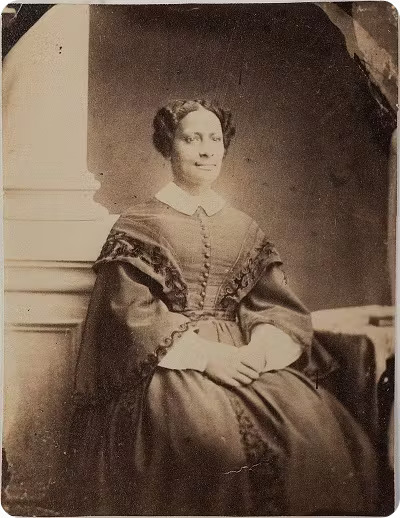
Sarah Parker Remond
We do have one concrete example of a black woman supporting the British suffrage movement, and that is a signature on the 1866 petition. The petition was signed by around 1,500 women but we don’t know how many of these were Black women, apart from the signature of Sarah Parker Remond. Remond was an African-American abolitionist and suffragist who had come to Britain almost 10 years earlier to lecture on the atrocities that her black brothers and sisters were experiencing back in America at the hands of white people.
In 1858, before her journey to the UK she wrote;
” “I do not fear the wind nor the waves, but I know that, no matter how I go, the spirit of prejudice will meet me.””
Remond was worried about the reception she would receive in Britain as a black woman but was pleasantly surprised stating that;
““I have been received here as a sister by white women for the first time in my life.””
Remond showed a devotion to tackling both racial and gender issues throughout her life, attending the first UK college offering higher education to women and helping end segregated seating at her local theatre.
She died in 1894, aged 70, having witnessed the abolition of slavery but not the suffrage of women, but her part in the beginning of the movement will forever be documented.
Were the suffragettes racist?
Sarah Parker Remond’s concern over treatment due to her skin colour is wholly unsurprising. It is now a widely-accepted fact that the Suffragette movement in the USA was shaded by racism and white supremacy. When women in America did finally get the vote in 1920, the reality was that this achievement primarily benefitted white women and not the black women who also fought for the right. Instead, these women, who had been frequently shunned by the white suffragettes, endured the same intimidation and terrorisation that the men in their family also had to go through when attempting to vote.
DEEDS NOT WORDS:
Emily Wilding Davison
Emily Wilding Davison was particularly committed to ‘deeds not words’, notably hiding in the House of Commons on a number of occasions, including on Census night in April 1911 when she spent the night in a cupboard in the Chapel of St Mary Undercroft in order to state ‘House of Commons’ as her address on her census return.
She was imprisoned eight times for offences including assault and stone-throwing. Her final, and most dramatic, act was to step out in front of the King’s horse at the Epsom Derby in June 1913. It is unclear whether she intended to commit suicide, but she died soon afterwards of her injuries.

Leave A Comment